
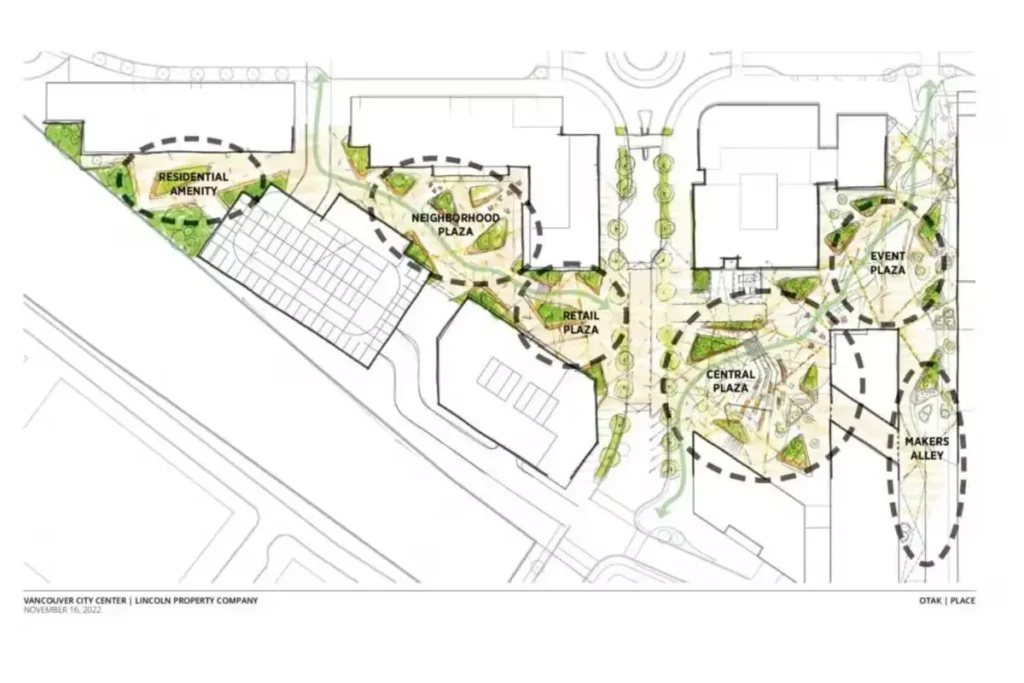
A major new chapter is unfolding in downtown Vancouver with the Waterfront Gateway Vancouver WA, a large-scale mixed-use project designed to connect the city’s historic core with its rapidly growing waterfront district.
Located on a 6.4-acre site in downtown Vancouver, this ambitious redevelopment sits between the Columbia River waterfront and the traditional downtown core—two areas that have evolved significantly in recent years but remain physically and functionally disconnected.
When complete, Waterfront Gateway will serve as a vibrant new urban district featuring housing, retail, office space, public plazas, and community gathering areas—all designed to enhance connectivity, economic growth, and livability.
Where Is the Waterfront Gateway Located?
The Waterfront Gateway site occupies a highly strategic location adjacent to key civic and commercial landmarks, including:
- Vancouver City Hall
- Vancouver Convention Center
- Hilton Hotel
The development is bounded by:
- West 6th Street (north)
- Columbia Street (east)
- Grant Street (west)
- Railroad berm (south)
This positioning makes it one of the last major undeveloped parcels in downtown Vancouver, offering a rare opportunity to reshape the urban landscape.
A Vision to Connect Downtown and the Waterfront
Over the past decade, Vancouver’s waterfront has transformed into a thriving destination filled with restaurants, apartments, walking trails, and public parks. However, a physical and visual divide—created by infrastructure and underutilized land—has limited seamless connectivity between downtown and the riverfront.
The Waterfront Gateway project is designed to bridge that gap.
City planners describe the project as a way to “knit together” the historic downtown and the newer waterfront district, creating a more cohesive and accessible urban experience.
Once complete, visitors and residents will be able to move more easily between these areas, with improved pedestrian pathways, public spaces, and active street-level development.
What Will Be Built?
The Waterfront Gateway project is planned as a mixed-use district, meaning it will combine residential, commercial, and public spaces into one cohesive environment.
Housing
One of the most important components of the project is housing. Plans call for approximately:
- 425 total residential units
- 95 units reserved for households earning 60% of area median income or less
- Additional units targeted for residents earning up to 80% of area median income
This mix of market-rate and affordable housing is intended to ensure that the development serves a wide range of residents and supports long-term affordability in the downtown area.
Retail and Dining
The project will include:
- Over 10,000 square feet of retail and dining space
- A focus on locally owned businesses rather than exclusively national chains
This emphasis on local businesses aligns with the city’s broader goal of supporting small business growth and creating a unique neighborhood identity.
Office Space and Innovation
Earlier plans included a mass timber office building, representing a sustainable approach to construction and modern workspace design.
While some elements of the project have been adjusted due to market conditions, the vision for integrating employment opportunities and commercial space remains an important part of the development’s long-term goals.
Public Spaces and Plazas
Public gathering spaces will be a defining feature of Waterfront Gateway. Plans include:
- A central public plaza for events and community programming
- Open green spaces and pedestrian-friendly areas
- Public art installations and enhanced lighting
These spaces are designed to create a lively atmosphere and encourage social interaction, making the district a destination for both residents and visitors.
Affordable Housing at the Core
One of the most notable aspects of the Waterfront Gateway project is its strong emphasis on affordable housing.
The first phase of development—currently underway—includes a 95-unit affordable housing project built in partnership with community organizations.
These units are targeted toward households earning between 30% and 60% of the area median income, helping address one of the region’s most pressing challenges: housing affordability.
Additional phases will expand the number of affordable units, ensuring that the development remains accessible to a diverse range of residents.
Economic Impact and Job Creation
Beyond housing and amenities, Waterfront Gateway is expected to play a major role in Vancouver’s economic growth.
The project will:
- Create new jobs in construction, retail, and hospitality
- Attract new businesses to the downtown core
- Increase foot traffic and economic activity
- Support local entrepreneurs and small businesses
City officials view the development as a key driver of economic vitality, helping to strengthen Vancouver’s position as a growing urban center in the Pacific Northwest.
Sustainability and Modern Design
Sustainability is another key focus of the project.
Plans include targeting LEED-Gold certification, a recognized standard for environmentally responsible building practices.
Features may include:
- Energy-efficient building systems
- Sustainable construction materials
- Walkable design to reduce reliance on cars
- Integration with public transit and bike infrastructure
The use of mass timber construction in some buildings highlights Vancouver’s commitment to innovative and eco-friendly development practices.
Adapting to Market Conditions
Like many large-scale development projects, Waterfront Gateway has faced challenges related to changing economic conditions.
In 2026, updates to the development agreement were approved to reflect shifts in the housing and commercial real estate markets. These changes included:
- Adjustments to building plans
- A greater focus on housing
- Changes to certain commercial and plaza elements
Despite these modifications, the core vision of the project remains intact: creating a vibrant, connected district that serves both residents and visitors.
Construction Timeline
The Waterfront Gateway project is being developed in phases over several years.
Key milestones include:
- 2023: Development agreement approved by Vancouver City Council
- 2025: Construction begins on the first phase
- 2025–2027: Initial development, including affordable housing
- 2027 and beyond: Additional phases of residential, retail, and public space development
As with most major urban developments, full build-out will take time, with the district evolving gradually over the next decade.
A New Gateway for Vancouver
The Waterfront Gateway project represents more than just another development—it’s a strategic investment in Vancouver’s future.
By connecting downtown to the waterfront, adding much-needed housing, and creating vibrant public spaces, the project aims to redefine how residents and visitors experience the city.
Combined with the continued growth of the waterfront itself, Waterfront Gateway will help shape Vancouver into a more connected, dynamic, and livable urban center.
For locals, it’s an exciting glimpse into what’s next. For visitors, it will offer a new entry point into one of the Pacific Northwest’s fastest-growing cities.
Looking for more Things to Do in Vancouver WA, check out our Things to do page.