
Vancouver, WA – January 29, 2026
In late January 2026, U.S. Rep. Marie Gluesenkamp Perez Under Fire After ICE Funding Vote. Marie Gluesenkamp Perez who represents Southwest Washington’s 3rd Congressional District, found herself at the center of a political firestorm — both nationally and in her hometown of Vancouver, Washington — after voting to fund the Department of Homeland Security (DHS), including U.S. Immigration and Customs Enforcement (ICE), and in the wake of widely criticized shootings by federal agents in Minnesota that left two U.S. citizens dead.
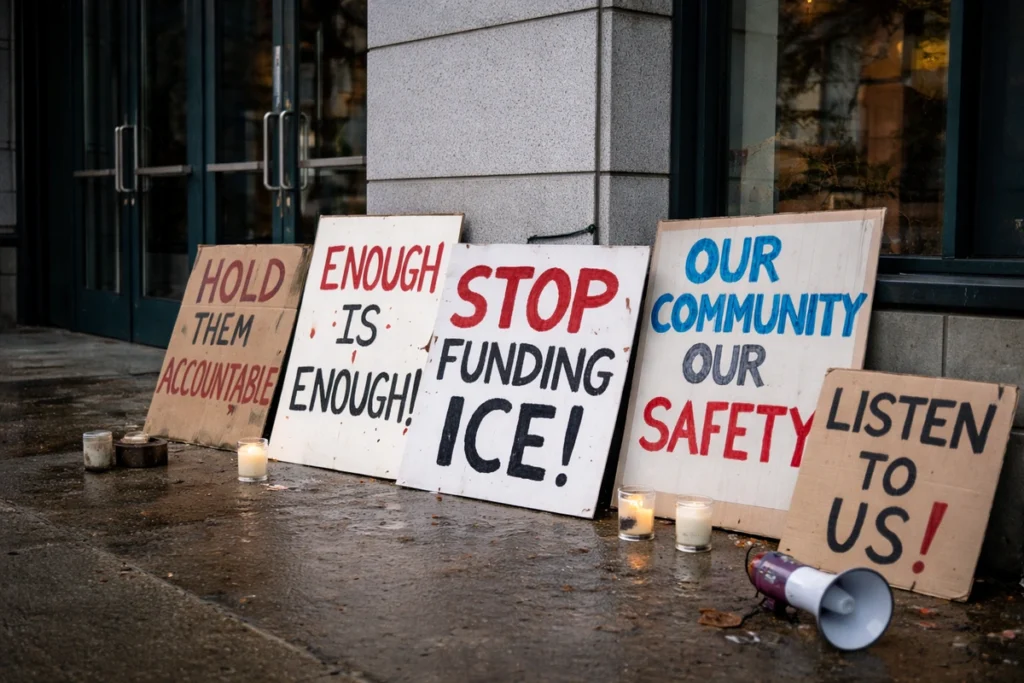
On the weekend following the contentious vote in the U.S. House, Perez’s regional office in Fort Vancouver was vandalized. According to Vancouver police, someone splashed red paint across a doorway of the office building. Nearby, Post-It notes and signs left by protestors expressed anger at her vote, with one reading, “You funded ICE, which is killing American citizens.” Authorities took a report on the incident, but no suspects have been identified.
Key Takeaways
- Rep. Marie Gluesenkamp Perez voted to fund DHS, including ICE
- Two fatal shootings in Minnesota intensified public backlash
- Her Fort Vancouver office was vandalized amid protests
- The controversy highlights tensions in Washington’s 3rd District
A Risky Vote in a Swing District
Perez, a Democrat elected to represent one of the most politically competitive districts in the country, was one of only seven House Democrats to vote in favor of a DHS funding package that included money for ICE. Supporters of the measure argued that it was essential to keep the federal government from shutting down and to ensure continuity for agencies such as FEMA, the Coast Guard, and others housed under the DHS umbrella.
In her statement defending the vote, Perez said she could not, “in good conscience,” support a shutdown that would jeopardize vital services, pointing in particular to disaster response capabilities like those provided by the Coast Guard and FEMA. Part of her rationale was that DHS funding is broad and not solely tied to immigration enforcement — a point championed by others in Congress who supported the bill.
However, the political calculus was complicated. Critics, both locally and nationally, saw the vote as directly enabling the controversial activities of ICE, especially given unfolding events in Minnesota.
Shootings in Minnesota: A Flashpoint
Just two days after the House vote, federal immigration agents were involved in incidents in Minneapolis that resulted in the deaths of two U.S. citizens — a development that dramatically intensified national scrutiny of immigration enforcement and the agencies that carry it out.
The first of these incidents involved the fatal shooting of Renée Good, a 37-year-old woman shot by an ICE agent in Minneapolis on January 7, 2026. Good’s death generated widespread protests and criticism of ICE and DHS, prompting calls for greater oversight, investigations, and restraints on federal immigration enforcement operations.
In the same period, a second deadly encounter occurred involving Alex Pretti, a 37-year-old intensive care nurse, who was also killed by federal immigration agents. These shootings — part of a broader operation known as Operation Metro Surge, which expanded ICE and Border Patrol activities in Minnesota — drew rebuke from lawmakers across party lines, civil rights advocates, and community leaders who decried the use of deadly force against U.S. citizens.
The timing of these incidents — coming so soon after the funding vote — fueled frustration on the ground in Perez’s district. Protesters argued that by voting to fund DHS, and by extension ICE, she had contributed to an environment in which these fatal encounters occurred.
Local Backlash and Public Reaction
In Vancouver, the vandalism of Perez’s office became a visible symptom of the broader frustration among some constituents. While there have also been peaceful vigils and community conversations on the issues, the red paint incident underscored the intensity of sentiment among those who believe Congress should more directly address immigration enforcement and agency accountability.
Kim Kapp, a spokeswoman for the Vancouver Police Department, noted that officers responded to the graffiti incident, but no arrests have been made. Community reactions varied, with some empathetic to the anger but critical of the method of expression. Representatives from the historic trust that manages the Fort Vancouver building expressed concern about property damage and local taxpayer expense for repairs.
Across the nation, the Minnesota shootings have ignited debate about the role of ICE and DHS, the use of lethal force in immigration enforcement, and how Congress should balance border security with civil liberties and accountability. Following the incidents, a number of lawmakers — including Democrats in other districts — publicly expressed regret over their votes or voiced reservations about supporting ICE funding without stronger oversight and reform provisions attached.
Perez’s Position on Enforcement, Policy, and Oversight
As the controversy unfolded, Perez released a statement condemning what she described as “unacceptable” shootings and called for firmer leadership at DHS, including urging the resignation of Secretary Kristi Noem. She did not directly tie her vote to the violent incidents in her comments, but the timing heightened scrutiny around her decision.
Perez has characterized broad calls to “defund ICE” as overly simplistic and not a viable solution to the complex challenge of immigration enforcement and border security. She emphasized that DHS encompasses many critical public safety and disaster response functions beyond immigration operations. At the same time, she has signaled support for increased accountability and transparency within DHS and its components.
Political Implications in a Competitive District
Perez’s vote carries political implications beyond the immediate controversy. Representing a district that can swing between Democratic and Republican control, she walked a tight line between party expectations and constituent pressures. Her willingness to cross party lines on the DHS funding bill mirrored past instances where she has taken independent stances on key issues, often citing district interests and pragmatic governance.
Yet the backlash over immigration enforcement, especially in the context of the Minnesota shootings, highlights the political risk of such decisions. In addition to local protests, national discourse has sharpened around whether members of Congress should stand by broad funding measures that include controversial agencies without securing explicit reforms or guardrails.
The Road Ahead for Policy, Oversight, and Accountability
The debate over ICE funding and immigration enforcement is far from resolved. In Congress, some lawmakers have indicated they will oppose the DHS funding package in the Senate, advocating for either stripped provisions related to ICE or additional oversight measures. Such moves carry the risk of government shutdowns, further intensifying political tensions.
Meanwhile, community activists, legal advocates, and civil rights groups continue to press for fundamental changes to how immigration enforcement operates, especially when it involves the use of deadly force against U.S. citizens. The shootings in Minnesota have become a focal point for those arguments and a rallying point for protest movements in cities across the country.
Conclusion
The incident at Rep. Marie Gluesenkamp Perez’s Vancouver office represents more than an isolated act of vandalism; it reflects broader national tensions over immigration policy, congressional responsibility, and accountability for federal enforcement agencies. The backlash she faces — in her district and beyond — stems from both the specifics of her vote and the emotional response to recent tragedies involving ICE agents. As the political landscape evolves, Perez’s actions and reactions will continue to be watched by constituents, colleagues, and critics alike.
Frequently Asked Questions
Q: Did Marie Gluesenkamp Perez vote to fund ICE?
A: Yes — on January 22, 2026, Rep. Marie Gluesenkamp Perez was one of seven House Democrats who voted in favor of a Department of Homeland Security funding bill that included funding for U.S. Immigration and Customs Enforcement (ICE). The vote came amid broader debates over DHS priorities and recent violent incidents involving federal agents.
Q: Why was her Vancouver office vandalized?
A: Perez’s regional office in Fort Vancouver, Washington was vandalized with red paint following the DHS funding vote, prompting local protests and criticism from some constituents who opposed the inclusion of ICE funding and expressed anger over federal enforcement actions.
Q: What happened in Minnesota involving ICE agents?
A: In early 2026, federal immigration agents were involved in deadly shootings of civilians in Minneapolis, including the killing of 37-year-old ICU nurse Alex Pretti and the earlier death of Renée Good. These incidents intensified national protests and debates over ICE enforcement tactics.
Q: How has Perez responded to the backlash?
A: Perez defended her vote, emphasizing the need to fund essential DHS functions like FEMA and the Coast Guard while also condemning lethal actions by federal agents. She publicly called for leadership changes at DHS in
For more great content like this article, check out our News Section for Vancouver Online!